Moss beef. Fodder as well as space in croft or byre was in short supply on the peatland smallholdings over winter. Of the cattle that had grazed the moor all summer few were kept, most were either driven to the great cattle markets at Crieff or Falkirk or slaughtered. Cattle still graze Flanders Moss and their meat can be bought at the local farm shop.
On bonfire night in the treeless peatlands the palette is king.
On bonfire night in the treeless peatlands the palette is king. (Please respect the Sabbath).
Peat palette tartan
Peat palette tartan.
The buzzard’s watchtower, Bankhead Moss
The buzzard’s watchtower, Bankhead Moss.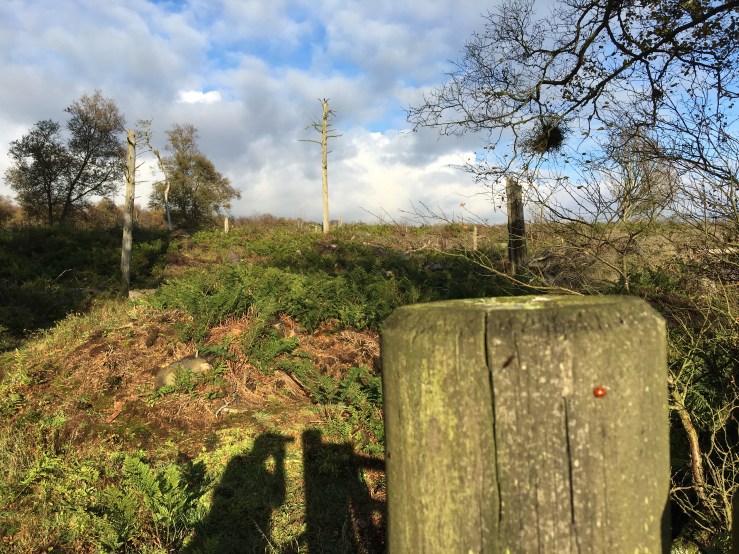
Disruption
Further dissent gripped the nation again in 1843 when the Church of Scotland split over state interference in religion. 450 Evangelical ministers departed from the church leaving not only their places of work but the manses that were there homes. Often hounded out of their parishes by unsympathetic landowners who wanted to preserve their rights of patronage, many, like the Covenanters before them, sought refuge on the moors. Sadly they led many parishoners who looked to them for guidance with them, prioritising belief over reality. Out on the moor many a preacher drew comparison not only with their Covenanting past but with desert of the Holy Land. For them, perhaps like those of the iron age cultures who sacrificed victims to their gods in the bogs of Northern Europe around the time Jesus was preaching in the Middle East, the moor was a littoral place, a place of transition between Heaven and Earth.
“The Killing Times.”
“The Killing Times.” In the 17th century when many Presbyterian dissenters refused to accept the Crown’s interference in religious affairs their followers sought refuge in the moorlands. One such Covenanter was John Brown of Priesthill in Ayrshire who in 1685 was executed beside his peat stack by James Graham of Claverhouse for refusing to take an oath of allegiance to the King.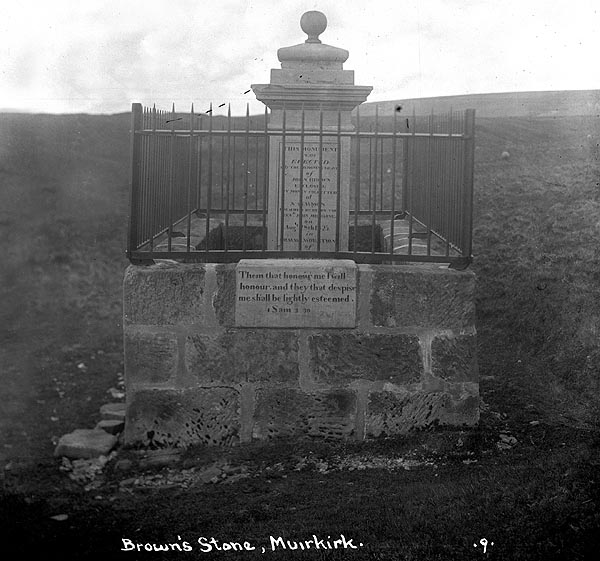
Martin Luther: The most influential person in Scotland’s peatlands for the past 500 years.
Five hundred years ago today Martin Luther nailed his 95 Theses to the door of Wittenberg’s All Saints Kirk. By protesting he changed not only the history and culture of Saxony’s but of Scotland’s peatlands.
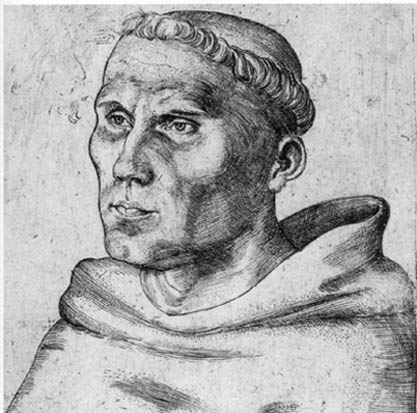
Martin Luther, engraving by Lucas Cranach the Elder, 1520.
Peat to a depth of half a metre has formed since then.
Witch’s cursing bone
Witch’s cursing bone. “A few years ago, the present writer came across a witch’s cursing bone…which had been the property of an old woman, a reputed witch, who lived near the head of Glen Shira, in Argyll, and who died there at the beginning of the present century [1900]. Such was her reputation that even after her death none of the Glen people would touch any of her possessions, and it was the minister…who found the bone upon the window ledge in her cottage. He took it away as a curiosity…in 1944 it was presented…to the Scottish National Museum of Antiquities.
“According to tradition, when the ‘witch’ wanted to ‘ill-wish’ a neighbour, she took her cursing bone and made her way to his croft between sunset and cock-crow. She did not go into the dwelling house, however, but made for the hen-house; and seizing the hen that sat next to the rooster (his favourite), she thrawed its neck and poured its blood through the hollow bone, uttering curses the while.
“The bone, which appears to be that of a deer, has been stained by age to a deep Ivory. It is enclosed in a ring of dark bog oak, roughly oval in shape. This is obviously a phallic symbol, to which the ‘witches’ we’re notoriously addicted.”
F. Marian McNeill, ‘The Silver Bough’ p.153/4 , Edinburgh 2001.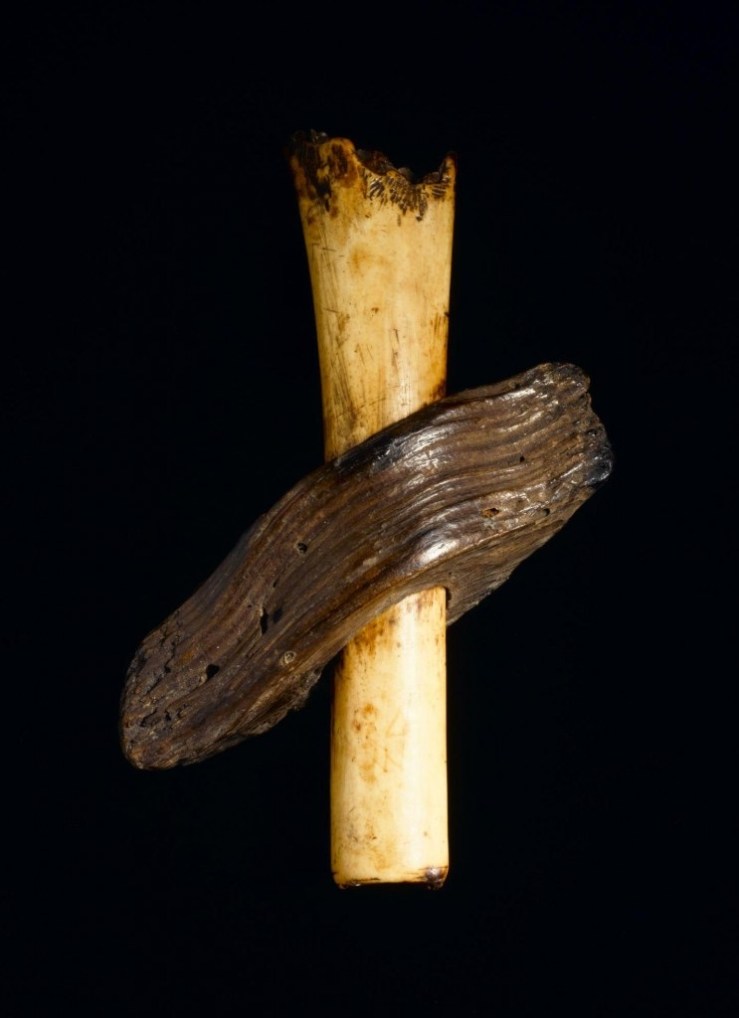
National Museum of Scotland
Tweed/stack
Tweed/stack.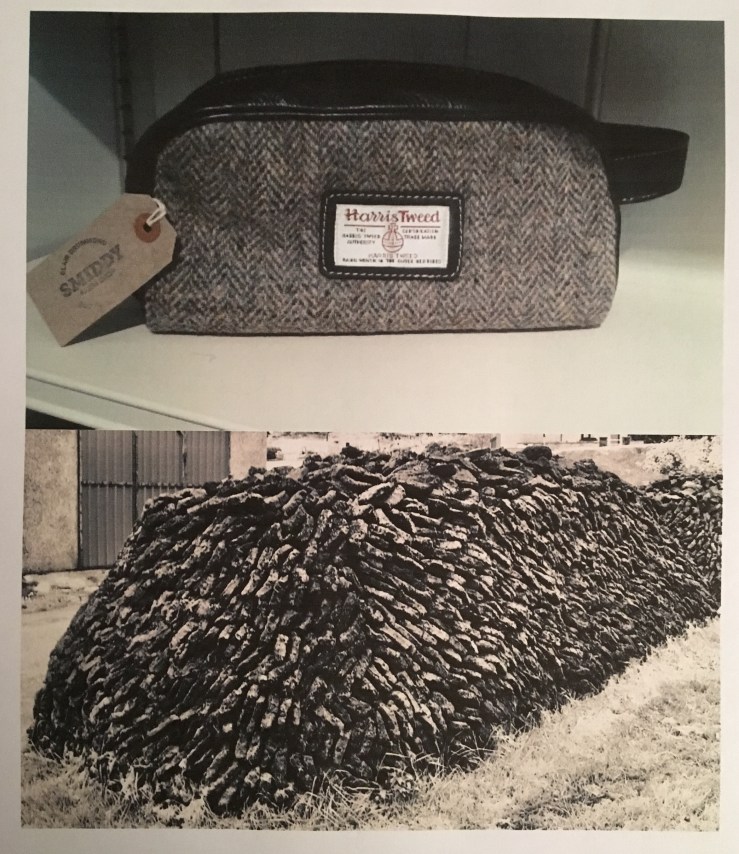
Old peat harvesting machinery, West Lothian.
Old peat harvesting machinery, West Lothian.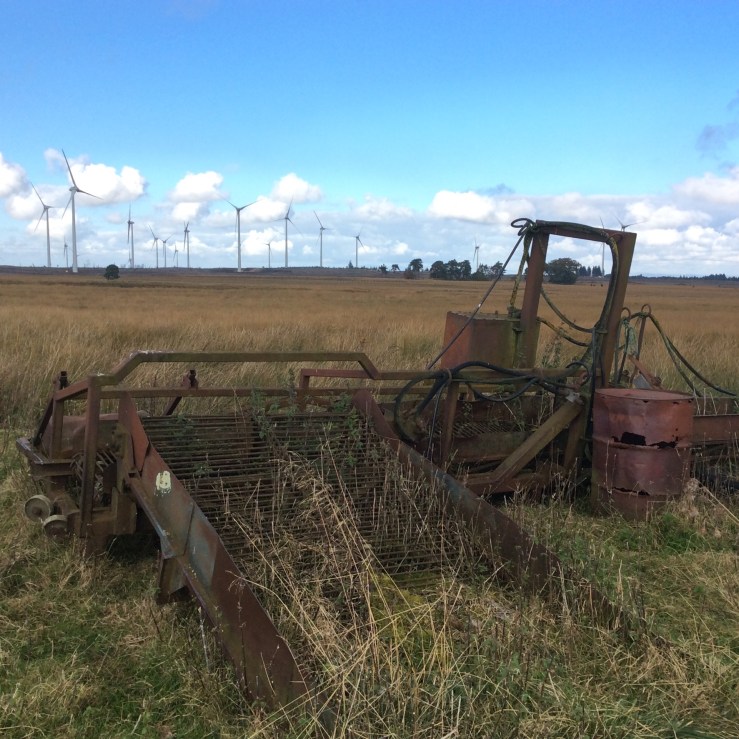
 Robin A Crawford