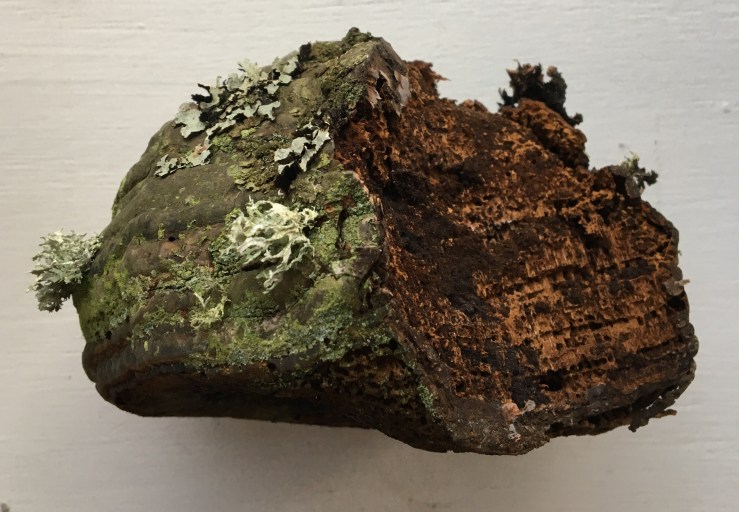
Horse hoof or tinder fungus

Horse hoof fungus, Latin: Fomes fomentarius, Gaelic: spong grows readily on dead birch trees fringing Scotland’s peat bogs. An extremely dry composition makes it perfect for use as tinder. Not only does its shape lend itself to fitting snugly into a pocket or fold in a plaid but it also burns very, very slowly making it invaluable to the semi-transhumance culture of the peatlands.74CC69BA-97F0-4787-B8BC-09EC91BF0BD648B57C67-3A6A-45A8-8C1C-337C12CBAA6C90D60EFB-D9AF-4BFB-8795-23B0F396C4C8176EEFE7-B9F5-4942-95D3-F9F6CED98AFD


Ice and fire(water) at Scotland’s oldest and newest distillery @LindoresAbbey

The monks of Lindores would  be supplied with peat from over the hill at Our Lady’s bog (now Ladybank, see previous post). They are the first recorded whisky distillers in Scotland.

“The Exchequer Roll, or tax record, from 1494 names Friar John Cor, a Lindores monk who was commissioned by King James IV to turn 8 bolls of malt into Aqua Vitae.

The excerpt from the Exchequer Roll of 1494 reads:

“Et per liberacionem factam fratri Johanni Cor per preceptum compotorum rotulatoris, ut asserit, de mandato domini regis ad faciendum aquavite infra hoc compotum, viii bolle brasii.”

Which roughly translates to:

“To Friar John Cor, 8 bolls of malt, wherewith to make aqua vitae for the King.” http://lindoresabbeydistillery.com/EEB27148-1BDE-4AA9-8577-5EEB8425E0D2

Self under self

When asked to write an autobiographical piece Norman MacCaig’s verse comes into (one) of my minds:

“Self under self, a pile of selves I stand
Threaded on time…”
From Summer Farm, 1955

Wither a peat stack without each slab?  Or a vast bog without each miniature sphagnum moss, 90% water…so human.

Self portrait in my own peaty footprint
Self-portrait in my own peaty footprint.


Biscuit tin/stove

The Waitrose biscuit tin is a copy in miniature of John Campbell’s range. The contrast between his idiosyncratic croft kitchen and the pre-fabricated anonymity of the closest branch of the up-market supermarket chain in Stirling 280 miles away is sharp. The warmth of the Hebridean kitchen does not only come from the peat-fuelled stove. Biscuits- and strong brewed tea- play their part too. They are immediately offered on entering and, whether wanted or not, a refusal cannot be contemplated, even if it is the fourth such offer at as many croft kitchens that afternoon.