




“About this artwork
This shows the choir of the Noorderkerk at Hoorn in North Holland. This part of the church was called the Armenkerk (church of the poor). Services were held here for poorer members of the local community who were then given food and peat, which they used for fuel. The Armenkerk was divided from the main church by a decorative screen. The carving above the door bears the town motto, ‘Gaat Hoorn Het Woort’ (which translates loosely as ‘Trumpet the Word’), where the word ‘Hoorn’ is represented by a carved image of a horn. There is a related watercolour by Bosboom, Consistoriekamer te Hoorn (The Amsterdam Museum) and an oil version (Stedelijk Museum, Amsterdam).
* Title: The Preacher
* Accession number: NG 1468
* Artist: Johannes Bosboom Dutch(1817 – 1891)
* Gallery: In Storage”
image and text © copyright National Galleries of Scotland


1/ Was the gate found under the peat stack in North Uist actually a gate from Kisimul Castle?
2/ With the restoration of Kisimul Castle in the mid-20th century a new entrance was formed and the old entrance walled up within the castle’s curtain wall but was the original gate (or at least the gate that was there in the 19th century) reused?
a) There was no gate or iron ‘yett’ in the entrance a year before the peat stack newspaper article appeared in May 1939. A photograph ‘Detail of Entrance’ SC1254002 dated 6/1938 in the collection of Canmore shows the entrance walled up and stairs completely missing.
b) The photograph ‘Detail of original entrance’ SC1253891 taken in 1955 and also on the Canmore website does not have the gate hung. https://canmore.org.uk/collection/1253891
c) but the ‘View of curtain wall showing old and new entrances’ SC1253576 dated August 1967 does. https://canmore.org.uk/collection/1253576
We can therefore say that between 1955 and August 1967 what appears to be the present gate was fitted to the new entrance. SCRAN have a b&w photograph that appeared in ‘The Scotsman’ during restoration of the castle, no date but probably 1950s or 60s which appears to show the top half of the present gate in the background. Scran ref: 000-000-040-268
d) This piece describes who was employed in the works:-
“…architect of the restoration, never needed to look beyond Barra for the on-site labour, skills, and organising ability required to complete this work. Except for such specialised things as iron work and mill work, necessarily carried on away from every construction site, every bit of the restoration was performed by Barramen. Thus the
rebuilding of Kisimul was accomplished virtually entirely by the descendants of those who built the Castle…”
http://www.isleofbarra.com/kisimulcastle.html
e) The following passage from Robert Lister MacNeil’s account of his restoration of Kisimul suggests that he did not have the original gate or ‘yett’:
“…I found myself uninformed regarding the correct design of some part of an extremely ancient castle. For example, there was the “yett” or hand-wrought iron grill for the castle’s entrance…”
p.160
From ‘Castle in the Sea’ by Robert Lister MacNeil, Vantage Press, 1975.
The entry for Kisimul castle in ‘The Buildings of Scotland: Highlands and Islands’ does not refer to the yett or gate.
A 1939 newspaper article reports that:-
“The ancient wrought-iron gate that once guarded the entrance to Kisimul Castle, the ruined island fortress in the Outer Hebrides of the Chiefs of Barra, has been discovered in the neighbouring island of North Uist, a mile or two from the village of Lochmaddy, where it is in use as the base of a peat-stack …the present owner has promised the gate shall be restored to Kisimul.”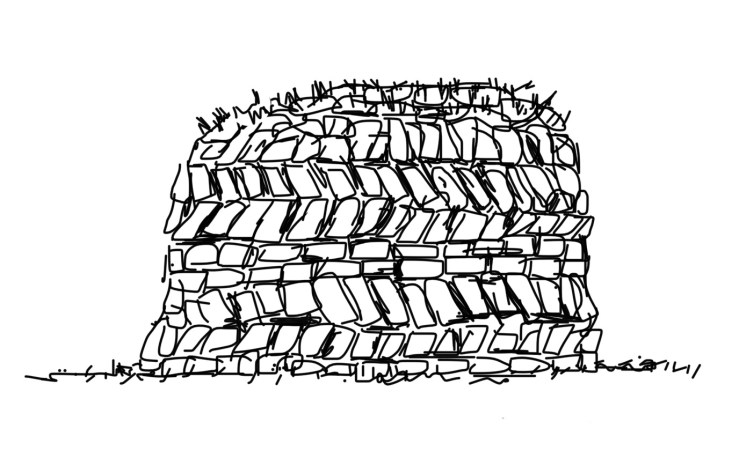 Can anyone tell me if it was?
On World Wetlands Day whilst celebrating the natural beauty let’s not forget the peoples who have for millenia lived on these peatlands- their stories should be told, listen to and respected.
Name: Donald Canuteson, Age: 45, Estimated birth year: 1796, Gender: Male,
Address: Polder Moss Settlers, Occupation: Agricultural Labourer
1841 Scotland census
Core peat sample from Kirkconnel Flow, Dumfries and Galloway.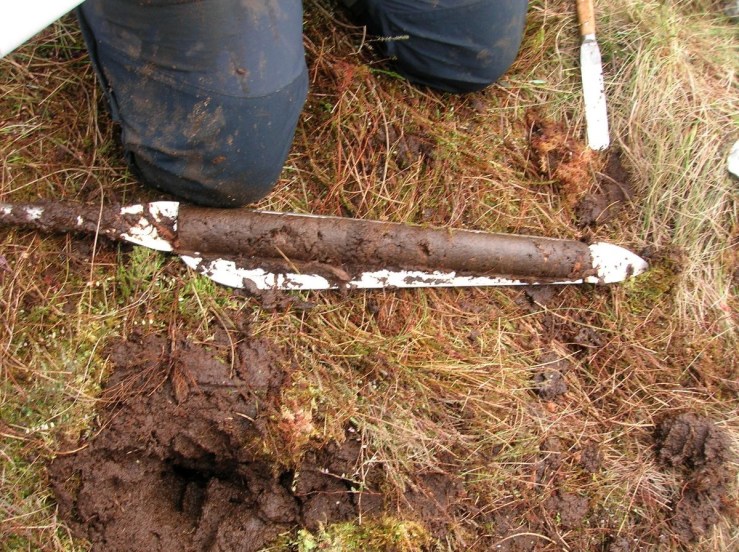
The hot Scarlet-cup lichen Cladonia coccifera grows abundantly and joyously on the exposed peat, a seductive and vivacious pointillism of primary coloured flame in a cold, wet landscape numbed and dulled by winter.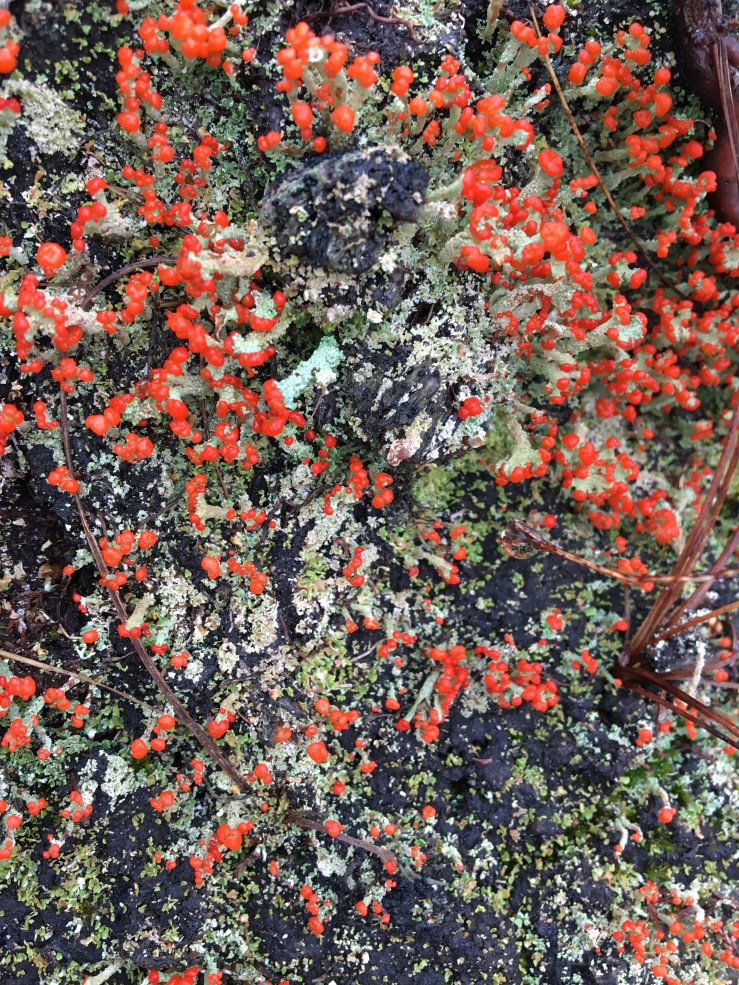
If history has taught us anything it is that people will always find their way around barriers to achieve their goals, eventually.
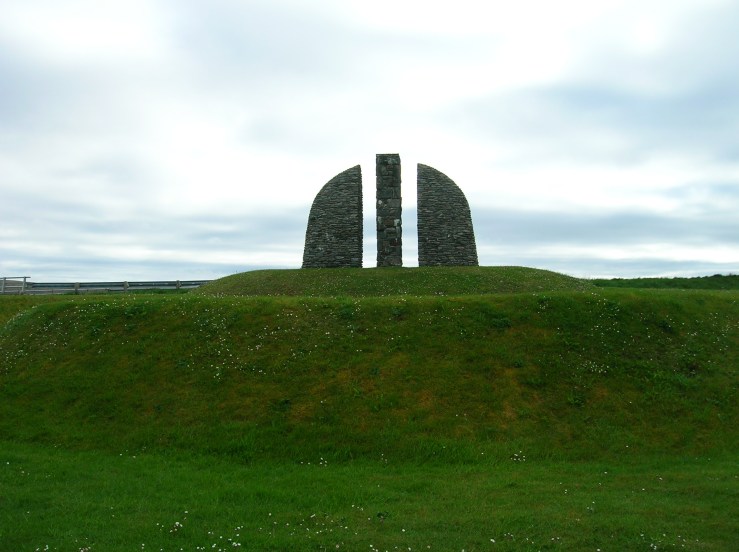
The land raid memorial, Gress. When industrialist millionaire Lord Leverhulme bought the Island of Lewis in 1918 he thought that he could do away with the traditional crofting way of life and replace it with an industrial capitalist system. Returning soldiers who had suffered the horrors of industrial World War in the trenches and their families had other ideas and refused to bow down to his dictat, refusing to accept the imposition of a culture alien to their values so they made land grabs to re-establish the crofts that they had been promised during the war by government. This memorial celebrates their victory in 1922 when the land was taken over by the Board of Agriculture and divided up into 100 crofts.
“It was very heavy rain, and I was wet to the skin, Captain M’Lean had but a poor temporary house, or rather hut; however, it was a very good haven to us. There was a blazing peat-fire, and Mrs M’Lean, daughter of the minister of the parish, got us tea.”
Monday 4th October, James Boswell, ‘The Journal of a Tour to the Hebrides with Samuel Johnson, LL.D.’

 Robin A Crawford