When you come across a fractured egg do you mourn the lost potential or be thankful for another day of survival?


When you come across a fractured egg do you mourn the lost potential or be thankful for another day of survival?
This clay is from a core sample taken on another raised bog, Kirkconnel Flow in Dumfries and Galloway. It was deposited there at the end of the last ice age around 10,000 years ago.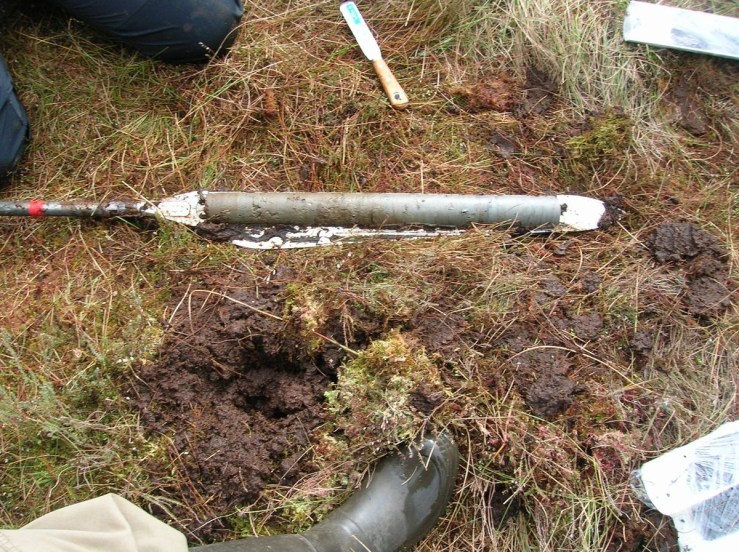
Under Flanders Moss raised bog is clay. You can see it in the nearby fields where parts of the bog were cleared, last year’s crop was beans.


The rocky promontory at Dunadd, Kilmartin, Argyll was an important site to the kings of Dal Riata and protected by the great peat bog, the Moine Mhor. It is believed that the placing of the foot in the sacred rock formed part of the coronation ritual.


Loom. Volcanic weights. Strata of Tweed.


Omnia mutantur, nihil interit (All things are altered but nothing dies.) 2 metres of peat have formed since Ovid’s death.
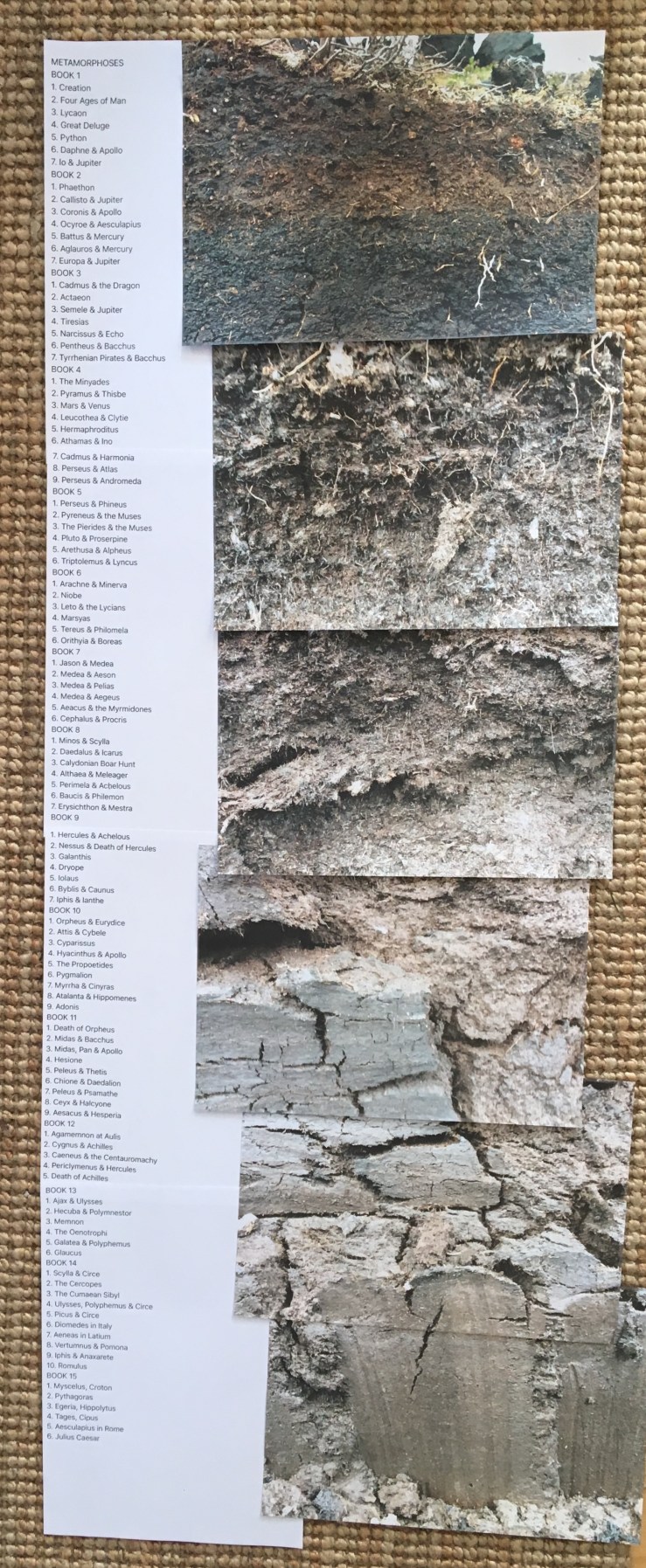
The world above, the world below.

magmatic


Looking down on the north Lewis moors from 36,000 feet all is cartographically still but for the white line of the waves breaking along the mile and a half of sandy beach at Tolsta. It is, after all, the Sabbath. But under the peat the godless, bituminous oils are moving. Having retreated before the winter’s chill they have joined that secret, underground blossoming- invisible beneath the unchanging sphagnum, the season-less lichens- that heralds spring. Previously beasts over-wintered in the byre end of blackhouses would be stirring, eager for the summer pasturing on the moor; women and children anticipating the happier, more relaxed, man-free days at the shieling. Men too are keen to be out of the house. The recent dry mid-April weather has drawn them from their firesides. Easter has passed and in two weeks the Mayday weekend will herald the traditional start of the peat cutting.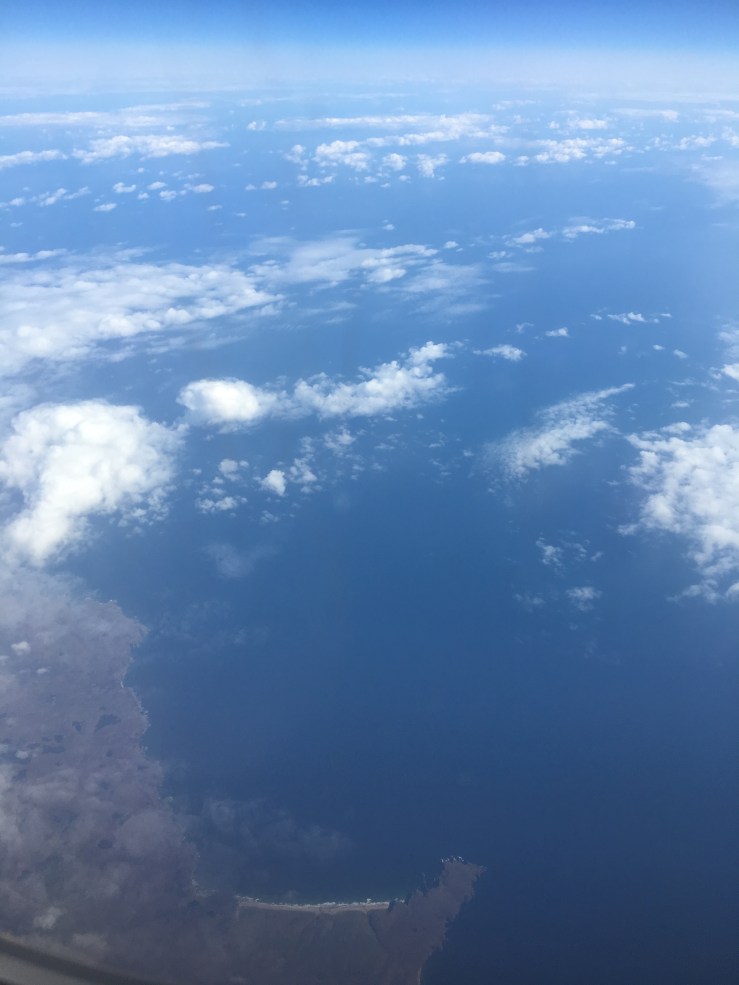
When I send Mary a photo taken from the plane (their croft is at the top left) she tells me that John has been out on the moor turfing two peat banks in preparation. “Turfing” involves removing the top, living six inches of the peat bank at about shoulder height and replacing it on the moor to regrow at foot level. The exposed peat is then ready to be cut. Here are some pictures of John turfing a bank.
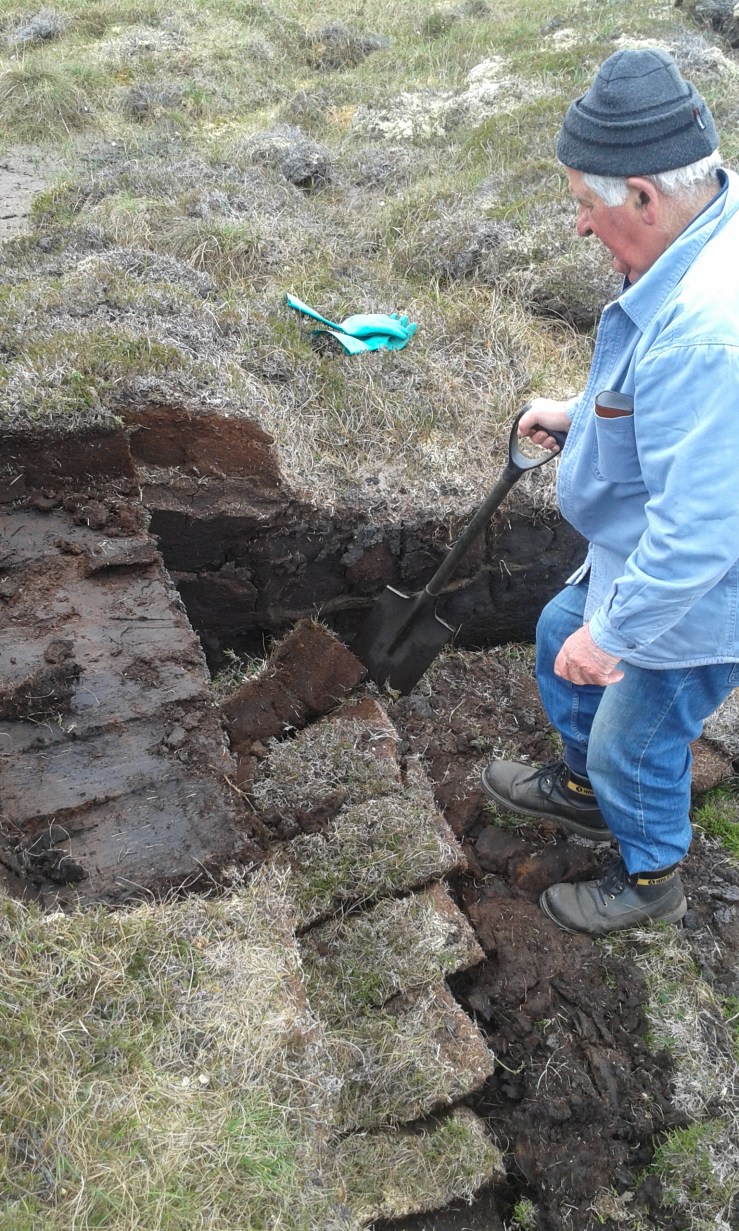
Using an ordinary garden spade he cuts the turfs down to the level of the dense peat, this not only preserves any living vegetation- still vital pasturage for his sheep to graze- but would produce smoky, less heat-giving fuel. John then “cleans” the top of the bank ready for cutting, the slabs of cut peat have to be dense and relatively angular so that they are robust enough to be thrown, dried, transported and stacked before being used. When he comes to cut the bank John will be standing on the newly cut turfs pressing the living roots firmly into the moor again.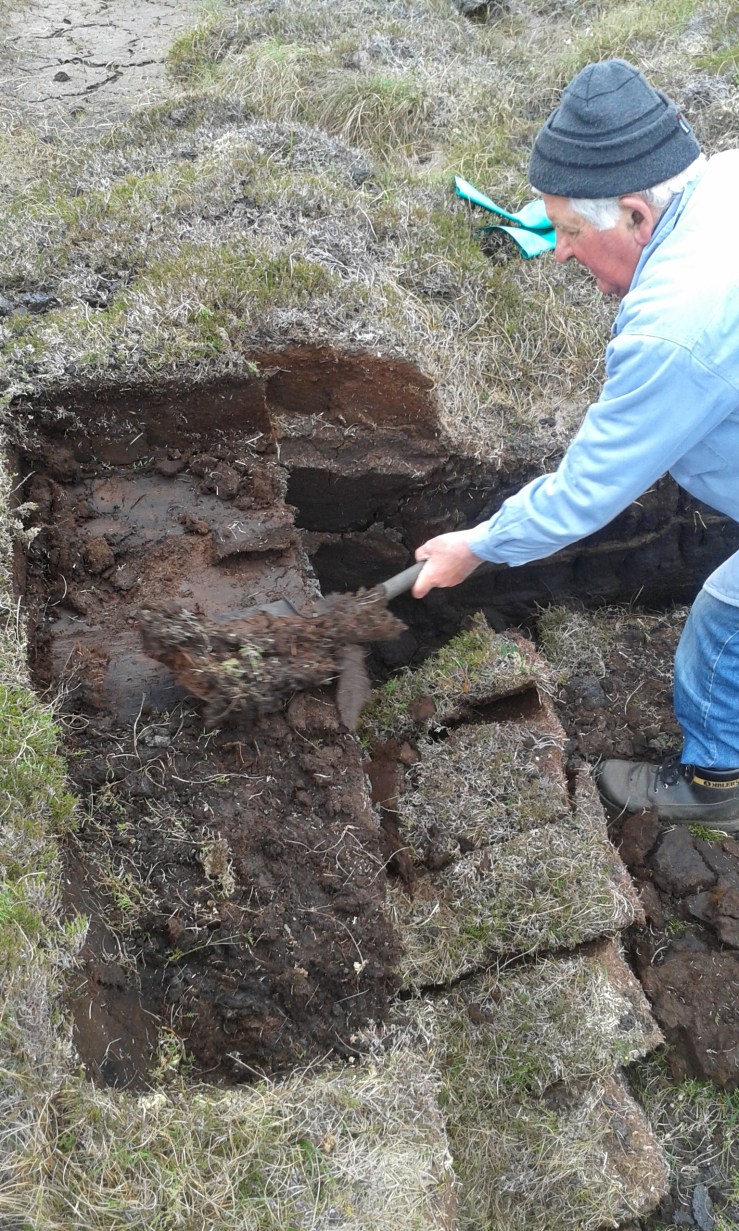
On the other side of Brekkukot the Vatnsmyri nature reserve is now home to ground nesting birds- greylag geese and arctic tern, new arrivals for the spring and summer; migratory North Atlantic humans check in at the nearby city airport; and a growing array of incoming business ventures like @CCPGames, whose CEO is pictured cutting the first turfs on a huge 17,500 sq m new office, workspace, conference hall and shopping development in conjunction with the #University of Iceland, below.
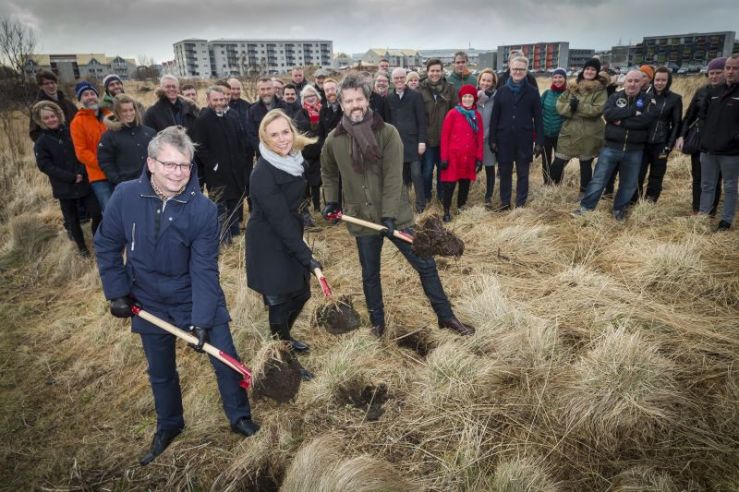 http://reykjavik.is/frettir/groska-hugmyndahus-i-vatnsmyri
Digging has long been part of Vatnsmyri’s history. Runolfur in ‘The Fish Can Sing’ tells the woman from Landbrot:
“There has been nothing to equal [the cess pools at Grotta] in the whole world since the great peat-pits were dug in Vatnsmyri many years ago.”
‘The Fish Can Sing’, Halldor Laxness p.66
 Robin A Crawford