More spadework on Lewis

Looking down on the north Lewis moors from 36,000 feet all is cartographically still but for the white line of the waves breaking along the mile and a half of sandy beach at Tolsta. It is, after all, the Sabbath. But under the peat the godless, bituminous oils are moving. Having retreated before the winter’s chill they have joined that secret, underground blossoming- invisible beneath the unchanging sphagnum, the season-less lichens- that heralds spring. Previously beasts over-wintered in the byre end of blackhouses would be stirring, eager for the summer pasturing on the moor; women and children anticipating the happier, more relaxed, man-free days at the shieling. Men too are keen to be out of the house. The recent dry mid-April weather has drawn them from their firesides. Easter has passed and in two weeks the Mayday weekend will herald the traditional start of the peat cutting.IMG_3046
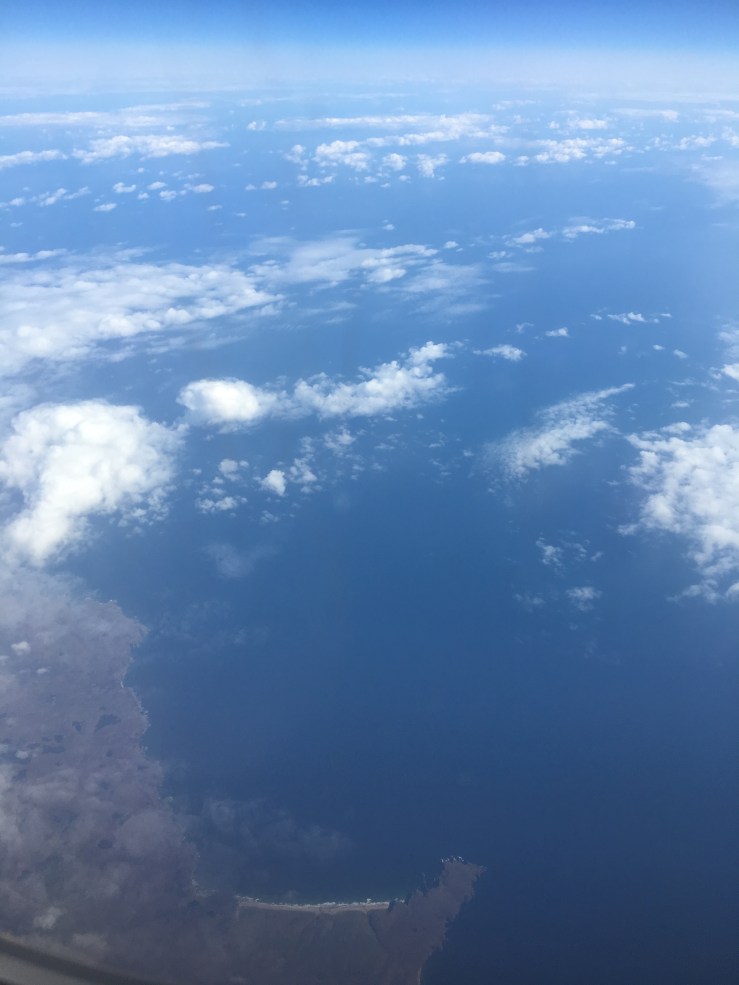
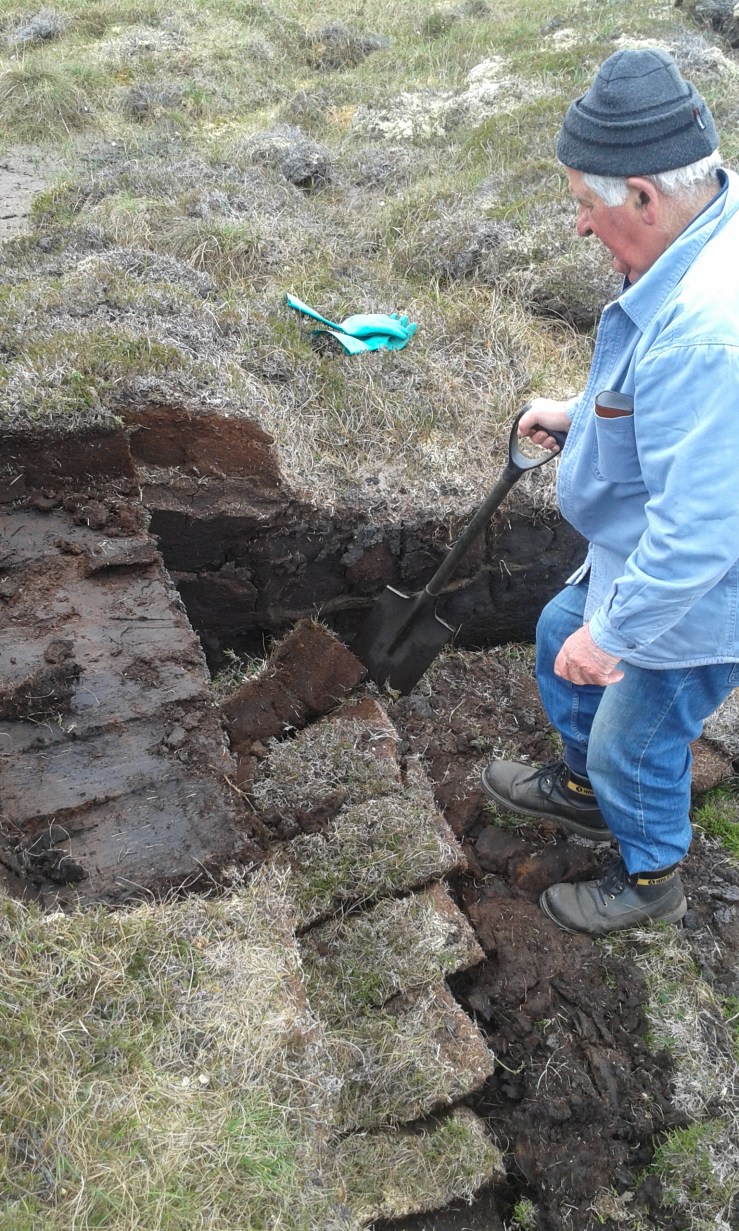
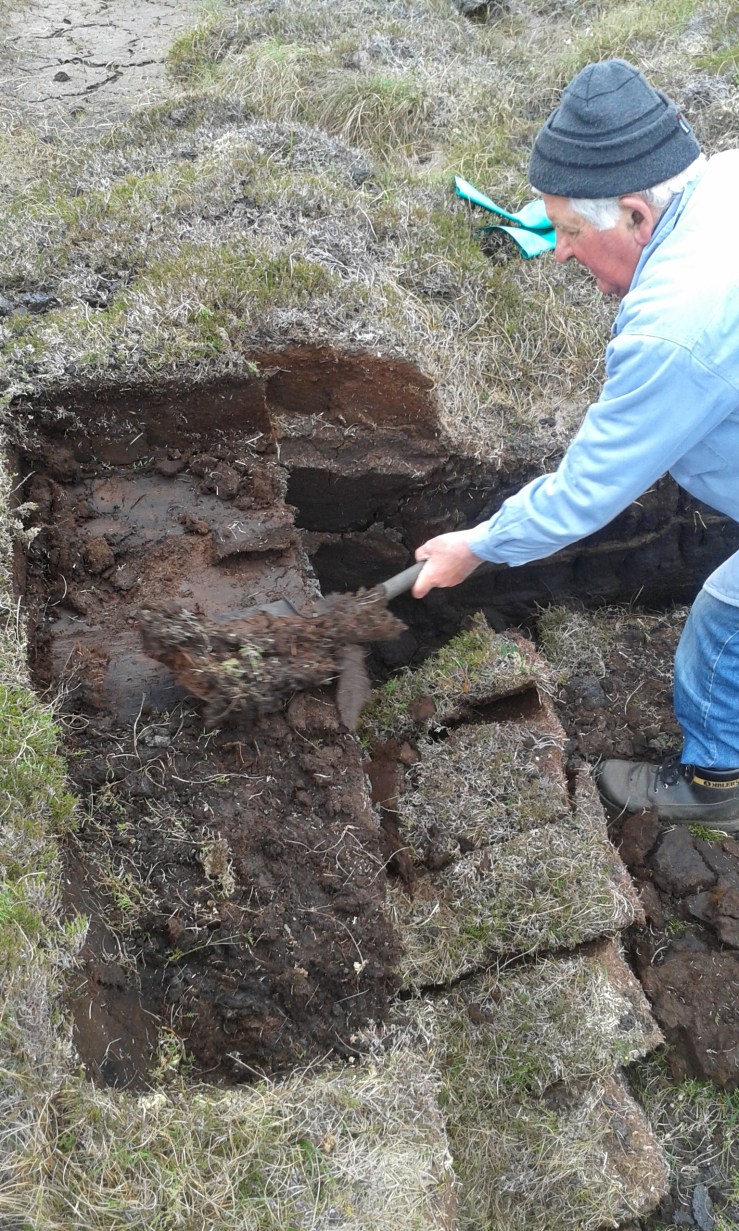
When I send Mary a photo taken from the plane (their croft is at the top left) she tells me that John has been out on the moor turfing two peat banks in preparation. “Turfing” involves removing the top, living six inches of the peat bank at about shoulder height and replacing it on the moor to regrow at foot level. The exposed peat is then ready to be cut. Here are some pictures of John turfing a bank.
IMG_2810
Using an ordinary garden spade he cuts the turfs down to the level of the dense peat, this not only preserves any living vegetation- still vital pasturage for his sheep to graze- but would produce smoky, less heat-giving fuel. John then “cleans” the top of the bank ready for cutting, the slabs of cut peat have to be dense and relatively angular so that they are robust enough to be thrown, dried, transported and stacked before being used. When he comes to cut the bank John will be standing on the newly cut turfs pressing the living roots firmly into the moor again.IMG_2811
More spadework in #Reykjavik 

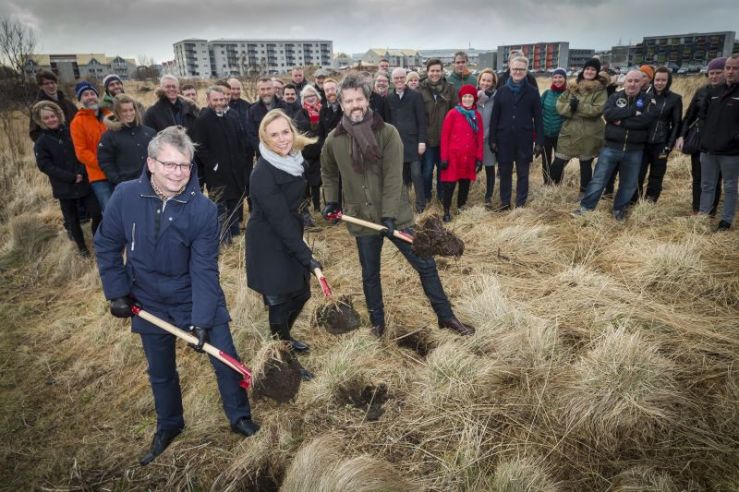
On the other side of Brekkukot the Vatnsmyri nature reserve is now home to ground nesting birds- greylag geese and arctic tern, new arrivals for the spring and summer; migratory North Atlantic humans check in at the nearby city airport; and a growing array of incoming business ventures like @CCPGames, whose CEO is pictured cutting the first turfs on a huge 17,500 sq m new office, workspace, conference hall and shopping development in conjunction with the #University of Iceland, below.

IMG_5384http://reykjavik.is/frettir/groska-hugmyndahus-i-vatnsmyri

Digging has long been part of Vatnsmyri’s history. Runolfur in ‘The Fish Can Sing’ tells the woman from Landbrot:

There has been nothing to equal [the cess pools at Grotta] in the whole world since the great peat-pits were dug in Vatnsmyri many years ago.”

‘The Fish Can Sing’, Halldor Laxness p.66

Brekkukot

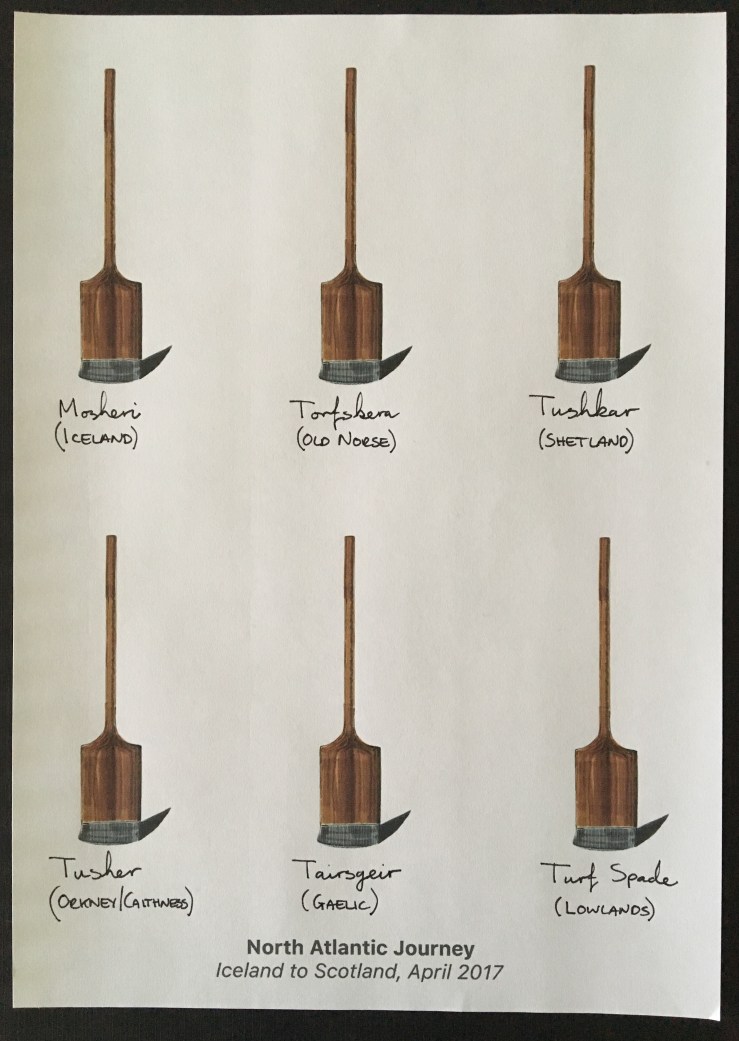
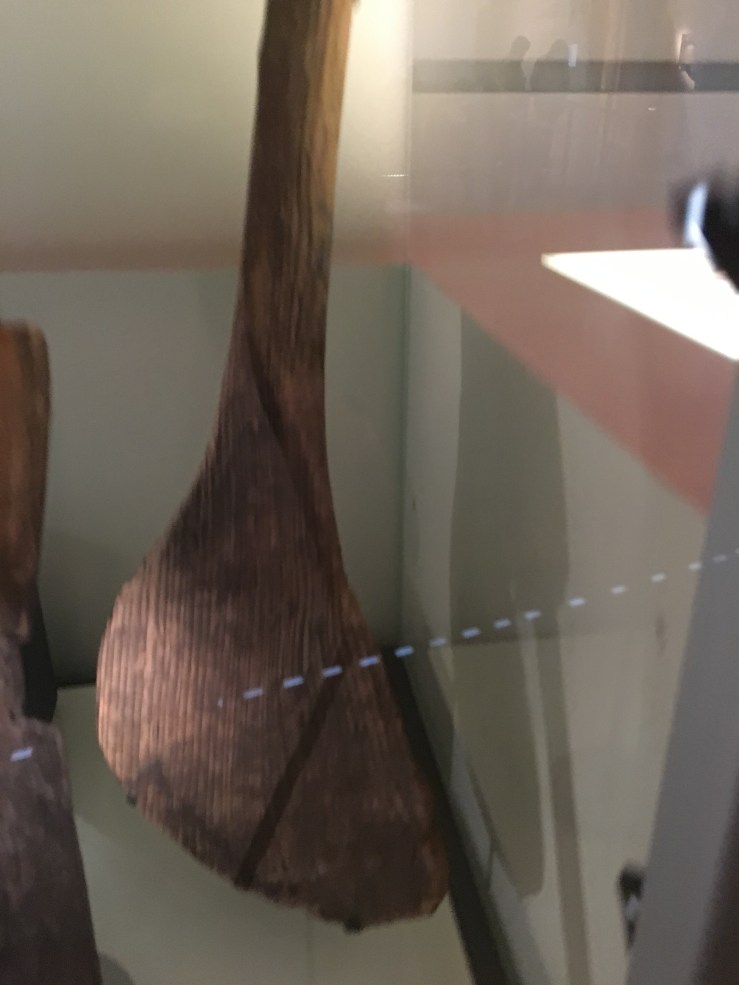
Iceland’s Nobel Prize winning author Halldor Laxness sets his novel, ‘Brekkukots Annall (trans: The Fish Can Sing)’ in the area of Reykjavik just across from the National Museum where all these peat spades are housed. Brekkukot was based on a real farmhouse, Melkot, which was located between the cemetery and the Reykjavikurtjorn lake just off what is now the city centre. Built in the 18th C. it was a double gabled traditional turf structure. Laxness’s parents had met there whilst working as farmhands and he had fond memories of it, its last tenant being a great aunt, before it was demolished in 1915 to make way for the grand suburban houses which now occupy the site.

As well as the cottage itself being of turf construction the use of peat as a fuel is also described in the book.

“The late Bjorn of Brekkukot was born and bred in this part of the world; his father had been a farmer here in Brekkukot when it had been a farm with its own meadows on the south side of the Lake, where, later, peat-pits were dug to supply this future capital city with fuel.”
p.7
“I cannot remember her otherwise than bowed and toothless, with a bit of a cough and red-rimmed eyes from having to stand before the open fire in the kitchen-smoke of Brekkukot, and before that in other cottages whose names I did not know. There might sometimes have been a little soot in the wrinkles of her face…”
p.24

IMG_5197