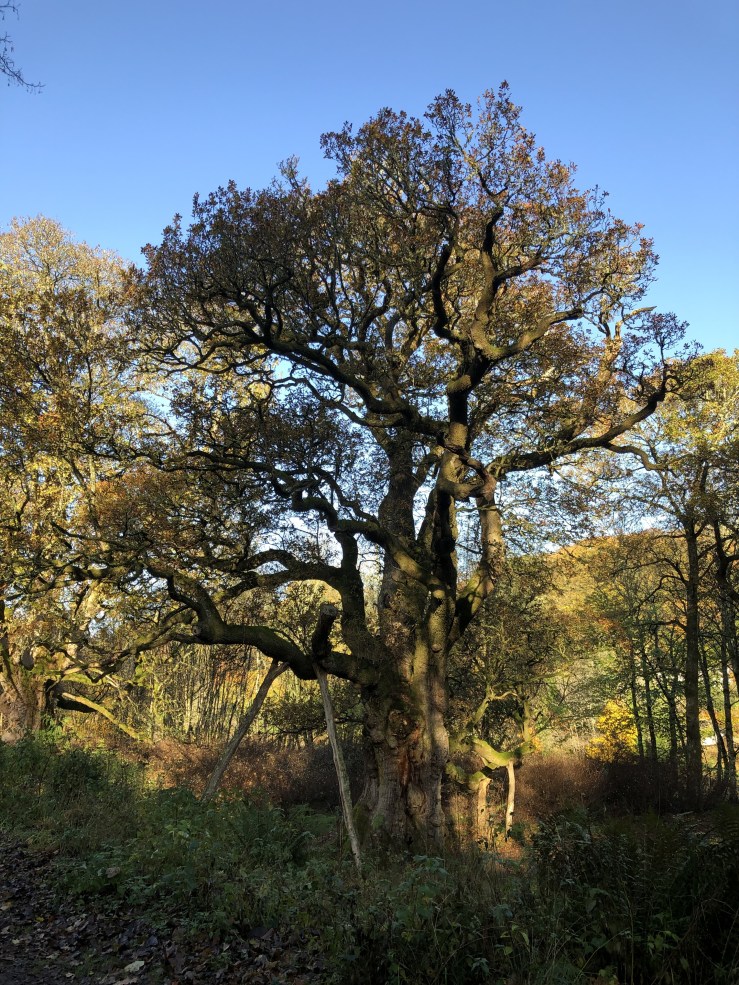
MacBeth was king of Scotland from 1040-1057. This ancient tree on the banks of the Tay at Birnam is associated with him. If not planted when the real MacBeth was king, it certainly was growing here when a travelling troupe of English players- perhaps including Shakespeare himself- visited Perthshire in 1599.
Places we now associate with Shakespeare’s play- Birnam Wood, Glamis and Dunsinane- all lie within the Tay’s catchment.
Another tragedy is taking place before our eyes. In the photograph above you can see that the branches of the tree are having to be supported. Human intervention along the river is causing the land around the tree to flood, undermining it. Without drastic action this mighty oak, like a slain king, will fall.
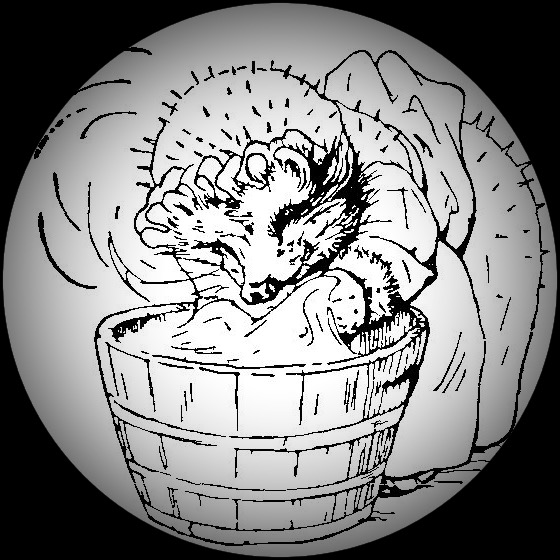
Wash. Rinse. Repeat. Beatrix Potter based ‘Mrs Tiggy-winkle’ on Kitty MacDonald, a washerwoman from Inver on the Tay. One of the many sounds along the river has been that of generations of poor women’s feet trampling in washtubs, their red raw hands beating laundry against river rocks, their fingers rasping on ribbed washboards.
Victorian holidaymakers to the Tay like Beatrix Potter would pass their stained clothing to local laundresses to be washed in its pure waters in basement rooms, outhouses or in tubs by the river. Potter dressed Kitty in 19th C. clothes but chose to depict her as a hedgehog, a small, timid creature but with prickly defences – an eater of slugs, different from them. “The Scotch,” she wrote were “tolerable savages.” Kitty was not just small, she was stunted from an orphaned childhood of malnutrition and a life of poverty.
150 years later Potter’s books are as popular as ever, what does that tell us about the attitudes to those who service the needs of tourists along the river today? Wash. Rinse. Repeat.

 Robin A Crawford