Crottal. Some Hebridean fishermen would not wear jumpers knitted with wool dyed from crottal. They believed that because crottal grew on the rocks on the moor it would be naturally attracted to the rocks on the seabed if they fell into the water.

Crottal. Some Hebridean fishermen would not wear jumpers knitted with wool dyed from crottal. They believed that because crottal grew on the rocks on the moor it would be naturally attracted to the rocks on the seabed if they fell into the water.
Brackish: where the peaty water of the Hebridean moor meets the salt water of the North Atlantic.
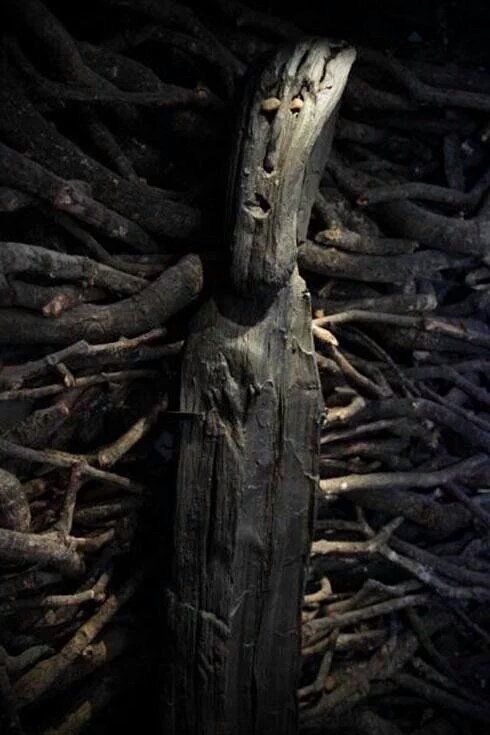
Our Lady of the Crossing.
The west coast of Scotland is a place dominated by the meetings of water and land: Atlantic on shoreline; cloud on mountain; mountain and sea; places in-between neither land nor water where sphagnum mosses form. In such places of flux, unsteady ground and danger people call on the otherworldly for assistance. Before the bridge was built at Ballahulish a short but treacherous ferry crossing avoided a twenty five mile trip round the shores of Loch Leven. Near there a peat cutter unearthed this ancient goddess in her woven bower.
Our Lady of the Bog.
Our Lady of the Land, Our Lady of the Sea,
Bring to our nets herring, in the furrows of the waters,
To our harvest- waves of barley, of wheat and of oats.

Herring bone peat stack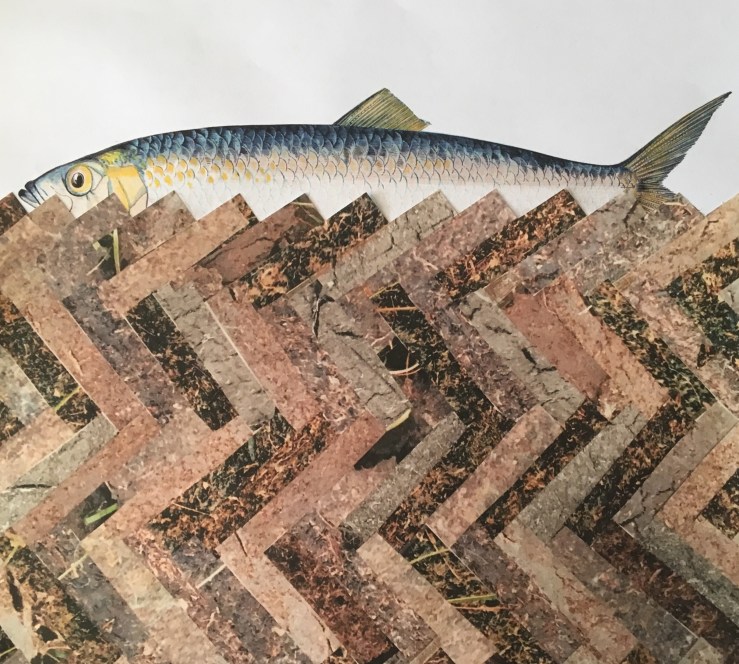
Herring girls/ herring bone peat.
‘Their laughter like a sprinkling of salt
showered from their lips,
brine and pickle on their tongues,
and the stubby short fingers that could handle fish,
or lift a child gently, neatly
safely, wholesomely, unerringly,
and the eyes that were as deep as a calm’
Ruaraidh MacThòmais (Derick Thomson)


more moor metal


Moor metal 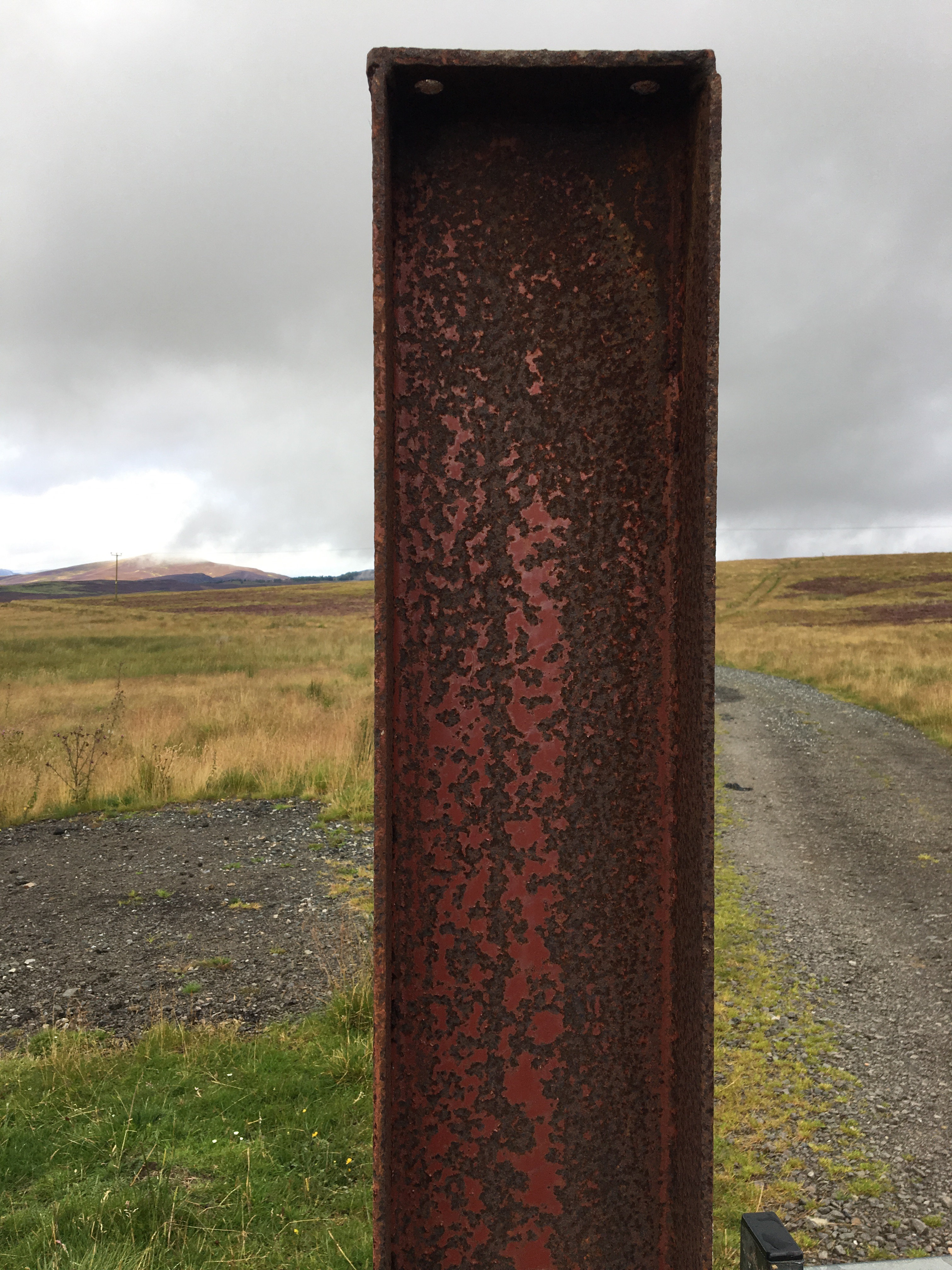
I don’t think our new fireplace is overly ostentatious…
 Robin A Crawford