

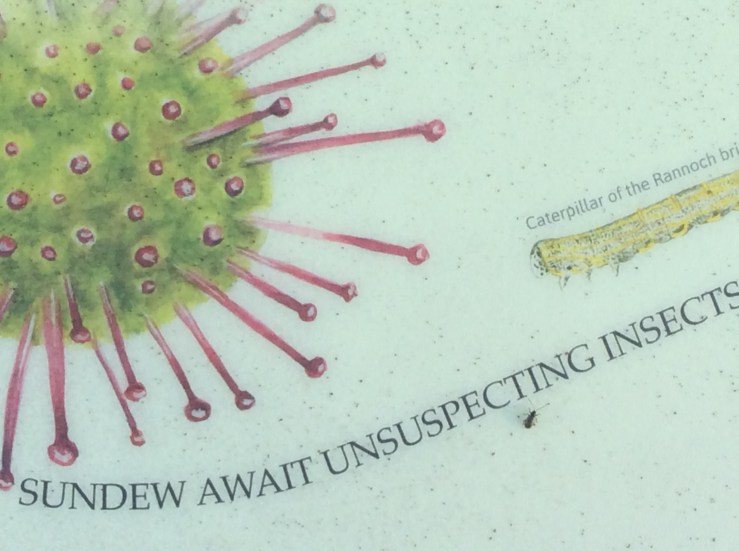
Lying on the moor (suitably waterproofed) with your eyes at insectivorous sundew level it seems like a tropical jungle in its lushness and variety. Noticing my cap has rolled off, I am surprised by how dull it now seems compared to the moorland’s summer bloom and how lacking in variety yet these were the very things that led me to pick this particular tweed in the ‘Lewis Looms’ shop in Stornoway- art has imitated nature but cannot match it.
Standing on the moor and looking down you marvel at the variety of the tiny plants and mosses, lichens and grasses that form its intricate colour and texture; there is reason in the placement of each, dependent on the nature of the ground- heather on the driest places, bog grasses on the semi-dry, sphagnums on the wettest. Where no vegetation can flourish the watery pools, crevices and openings reveal glimpses into the depths of the peaty morass; shapes and objects can be vaguely made out- beneath the rippling feet of the water boatmen and pondskaters- the blurred furriness of ‘drowned kittens’ moss, leaves, grass stalks, twigs, down to unseeable depths, mysterious caverns and passages in the unsolid mass of the ancient peat. Standing in itself is a timed activity as you gradually or quickly, depending on the part of the bog you are on, sink.
God-like you stamp your feet and the whole surface earthquakes in shivers.


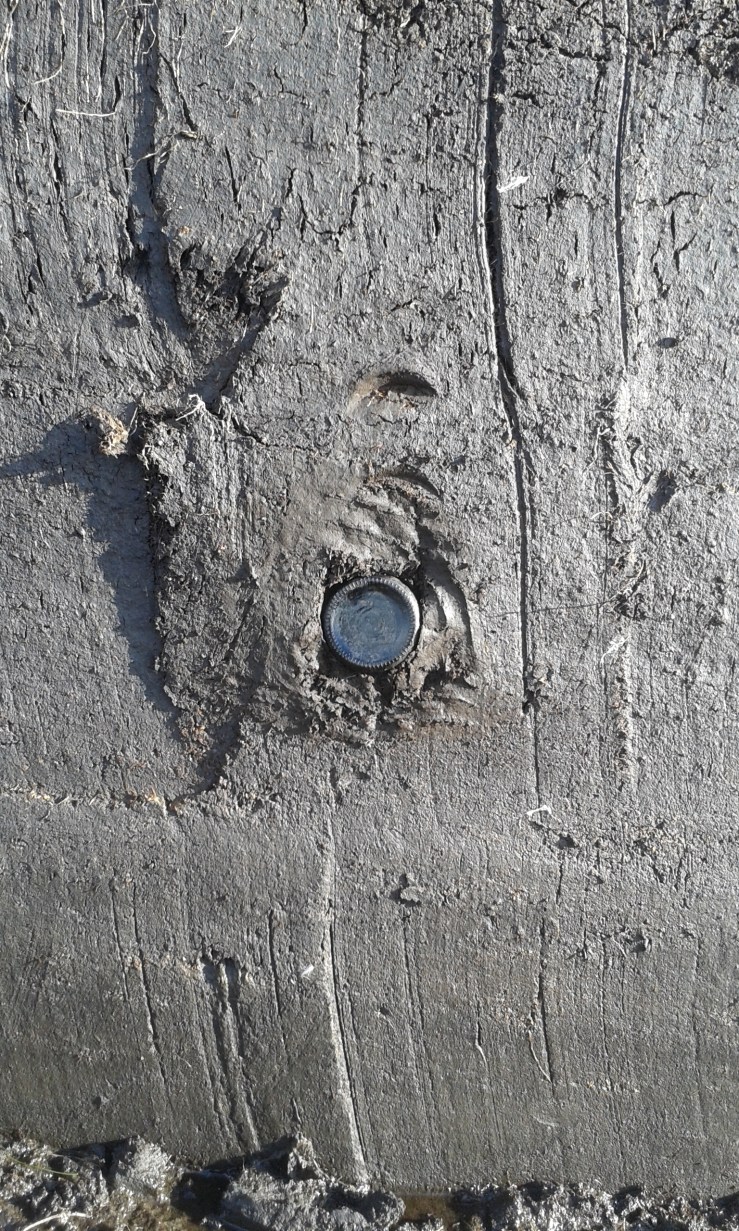


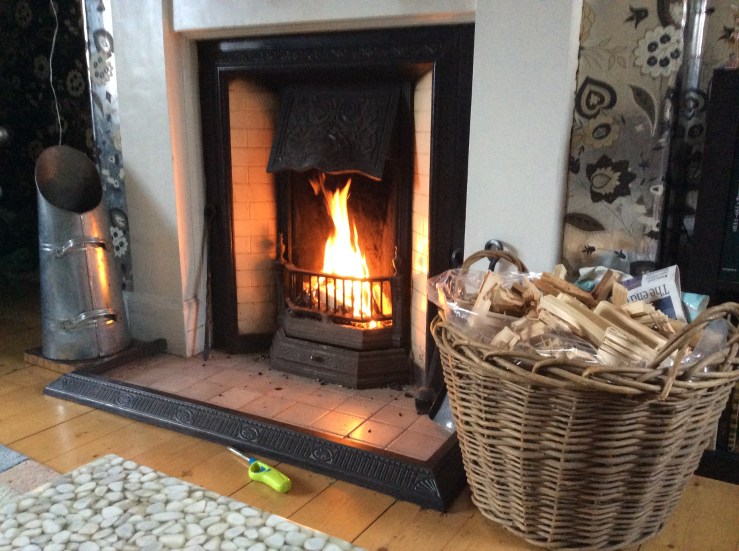
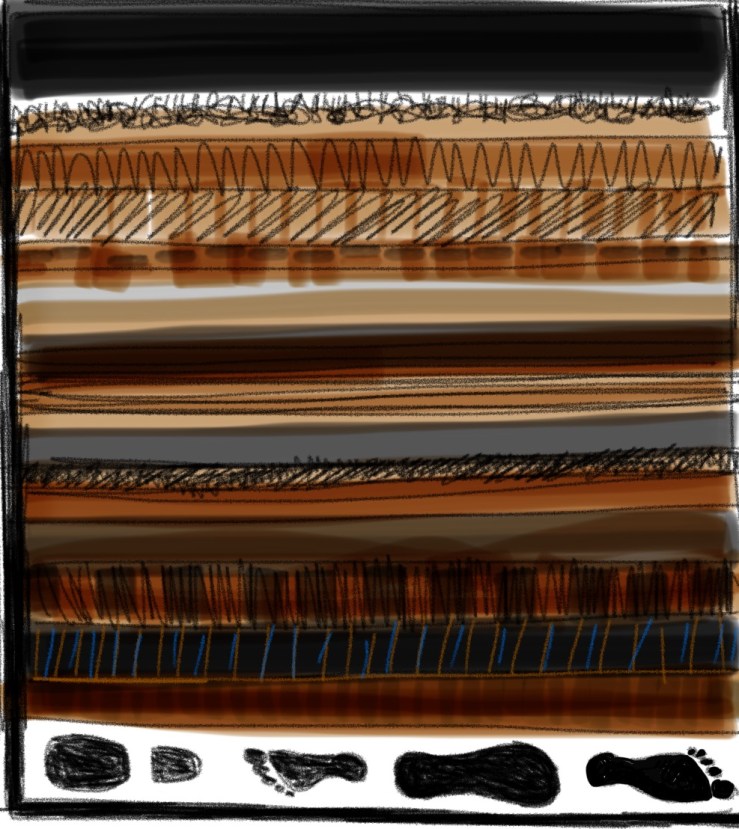 This is the complete drawing of the background image on my page: ‘Peat bank (for Angus Gillies)’, Autumn 2016.
 Sometimes in the past the issue with transportation was not the distance from peat bank to home but the nature of the terrain between the two. It was not uncommon for the peats to be carried by creel on the backs of the women and children to a point where larger transport, whether it be horse and cart formerly, or latterly lorry, could complete the journey home. In Gaelic this is called ag aiseag– ‘ferrying’, suggestive of the watery condition of the bog/land. Some of the most iconic pictures of peat are Victorian photographs of multi-tasking women knitting whilst carrying a creel of peat on their backs. Such is the strength of this image that the very outline of Scotland has been likened to a woman with a creel on her back. This is a caricature image a friend of my great, great, great grandfather uses in a poem addressed to him from his homeland in 1854 where “Auld Granny Scotlan’, happit in her plaid,” is delighted to hear that he raises a toast to her every St.Andrew’s night from over the sea and thus recipricates:
 Robin A Crawford